The Receipt Organization Toolkit. Stop losing margin to messy receipts.
Receipts pile up in trucks and email. The bookkeeper pieces it together two months late. By then, the job that lost money is already finished. Two free downloads — a 10-minute weekly routine and a tagging kit — that build the system that fixes it.
A weekly routine. A tagging system that survives in the field.
Two artifacts, built to work together. The routine installs the habit. The tagging kit makes every receipt readable — so the books finally tell you which jobs actually made money.
- 10-Minute Receipt Routine — PDF + Word, the weekly habit
- Receipt Tagging Kit — PDF + Excel, the system
- Free. No upsell. Built around Direct / Overhead / Special tagging.
The 10-Minute Receipt Routine
One block of time each week. Cleaner books, real job margins, and a lot less stress at tax time.
- 5-step routine you can run on your phone
- Pre-built checklist for the crew
- Construction-tailored examples (Smith remodel, fuel cards, dump runs)
- "What you'll have by month-end" outcome map
The Receipt Tagging Kit
A consistent way to label every receipt — so the books tell you per-job profitability instead of a generic P&L.
- Construction-tailored category list with Direct / Overhead / Special tagging
- Real-world tag examples
- Folder structure for non-app users
- 50-row fillable Excel log with auto-built tags
Direct · Overhead · Special.
Every receipt belongs in one of three buckets. Once the bucket is right, the books finally tell you which jobs made money.
Tied to one job.
Materials for the Smith remodel. Skid steer fuel for the Henderson driveway. Sub invoice for the Patel addition. Every direct receipt is a vote on that job's real margin.
Cost of being open.
Truck fuel-up, shop rent, office software, insurance, the bookkeeper. Allocate it across jobs as a percentage — never bury it inside one job's direct cost.
Owner draws, equipment, tax.
Receipts that look like job costs but aren't — owner meals, new equipment purchases, tax payments. Flag them so they don't distort margins or trigger a CPA conversation in April.
The routine installs the habit. The tagging kit reads the score.
Snap every receipt the same day
Field crew photographs the receipt, names the job, drops it in the shared folder. The receipt is captured before it makes it back to the truck console.
Run the 10-minute routine weekly
One block of time. Open the tagging kit. Tag each receipt Direct / Overhead / Special, add the job code if direct. Done in 10 minutes if the week was clean.
Drop tagged costs into the books
Now the bookkeeper can post each receipt to the right job in QuickBooks or Xero — and your monthly P&L finally has per-job margin instead of a single overhead bucket.
The episode this toolkit was built for.
Joe walks through the receipt routine on the Behind the Books podcast — why most contractors lose 2 hours a week to bookkeeper cleanup and the field-to-books handoff that fixes it. The toolkit on this page is the system from the episode.
Watch on YouTube →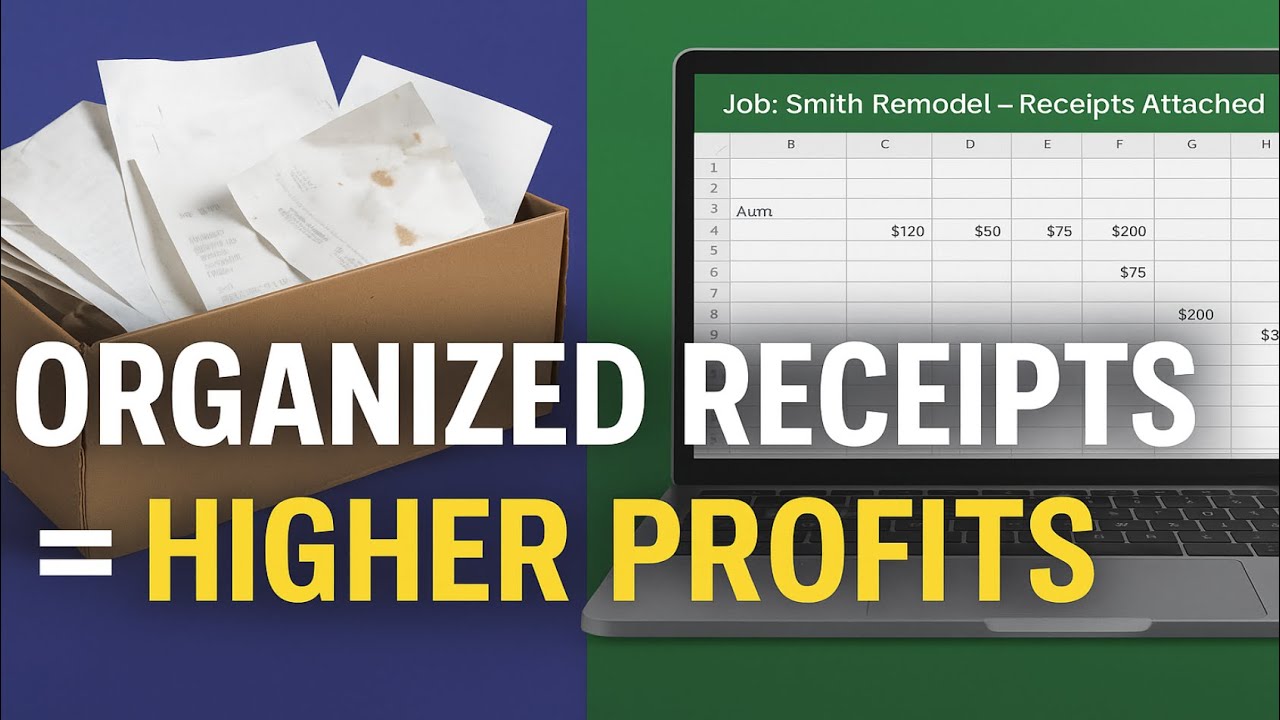
Stack it with the sibling toolkit. Then watch the margin pattern.
Receipt Leak Toolkit
The 12-month Excel tracker that mirrors the Receipt Leak Calculator. Captured + tagged receipts feed clean inputs into this tracker, and the zone meter shows whether your bidding gap is closing month by month.
Get the receipt leak toolkit →Job Cost Tracking Toolkit
Once your receipts are tagged Direct / Overhead / Special, the next step is the 30-job log that turns clean receipts into a clear picture of which jobs made money and which bid pattern is leaking margin.
Open the Job Cost Tracking Toolkit →Pair it with these.
Job Cost Calculator
Plug in revenue, materials, labor, subs. See your real gross margin and where it lands on the 30 / 35 / 45 scale.
Open the calculator →Profit First Bank Flow
The five-account setup — percentages, triggers, transfers.
Download →Financial Health Checklist
The 12-point owner checklist we walk through with every new client.
Download →If you're losing 2 hours a week to receipt cleanup, we can fix that.
Best Decision Bookkeeping installs construction-grade receipt routines and tagging for contractors and trade businesses. 30-minute call. No pitch. We'll walk your books and tell you what's missing.